I
From the dining room
What your guests see.
43.0481° N, 76.1474° WVol. 01 · Est. 2026
Less on the plate. More in the room.
Design, hospitality and technology for restaurants, from a working chef.
One house with three branches: brands, menus and websites; hospitality consulting from a chef-owner; and a custom system for the guest-facing site and everything behind the pass, designed for one restaurant at a time. Yours. The first one runs Eden in Syracuse every night.
No two restaurants run the same way. Their brand, their service and their software shouldn’t either.
Each branch takes the same two squares and gives them its own shape. That is the idea behind a responsive identity: a brand built as a set of rules instead of one frozen logo, so it can answer the work, the season and the service.
Brands, menus and websites for restaurants, from a chef trained in graphic design.
The front and back of house, from a chef and owner who runs one every night.
A custom system for the guest-facing site and everything behind the pass, built for one restaurant: yours.
An example of a responsive identity: this site's own mark. Try it.
THE MARK · HOUSE43.0481° N, 76.1474° W
Less on the plate. More in the room.
The house mark: two signal squares in place of the dots of the ü.
Your brand should feel like walking through your own front door. Logos, menus, websites and signage are designed to match the look and feel of your business: its room, its food, its pace and the people it serves, so every piece reads as unmistakably yours. Rich trained in graphic design at Champlain College before he cooked for a living, so the design comes from someone who knows both sides of the pass.
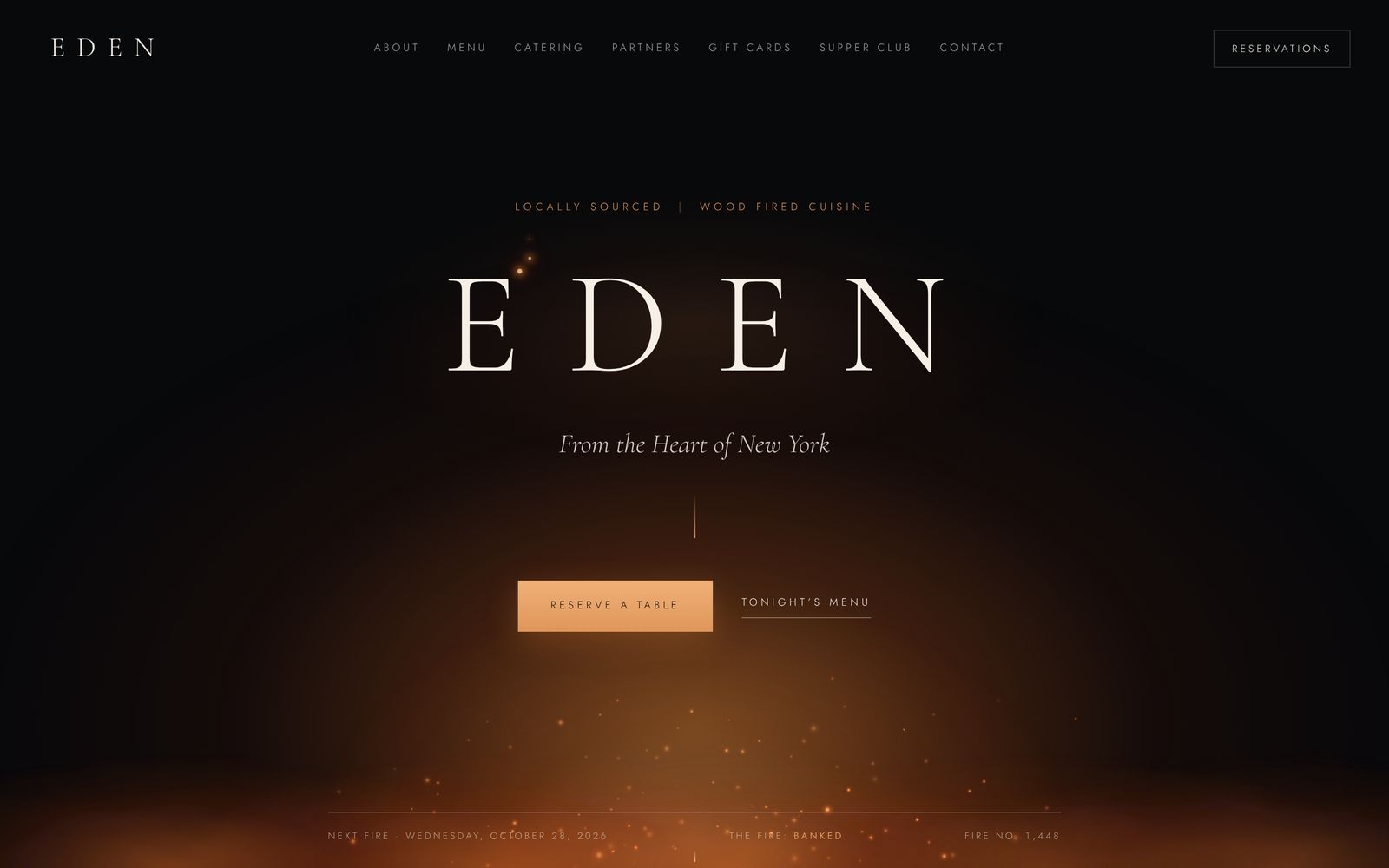
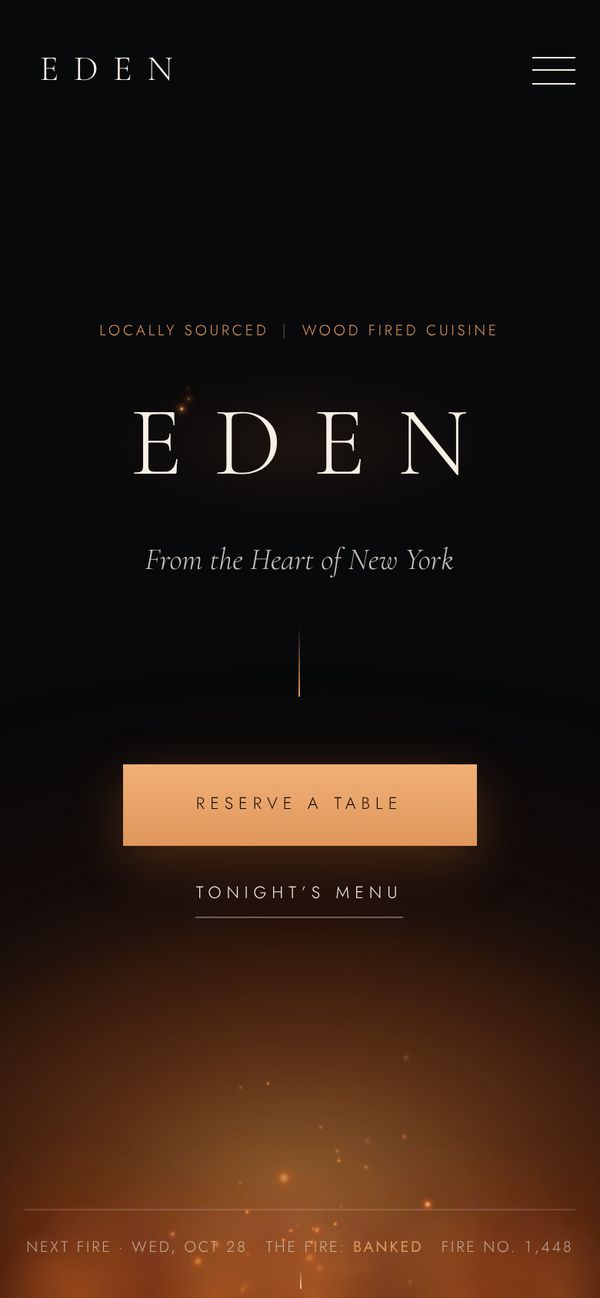
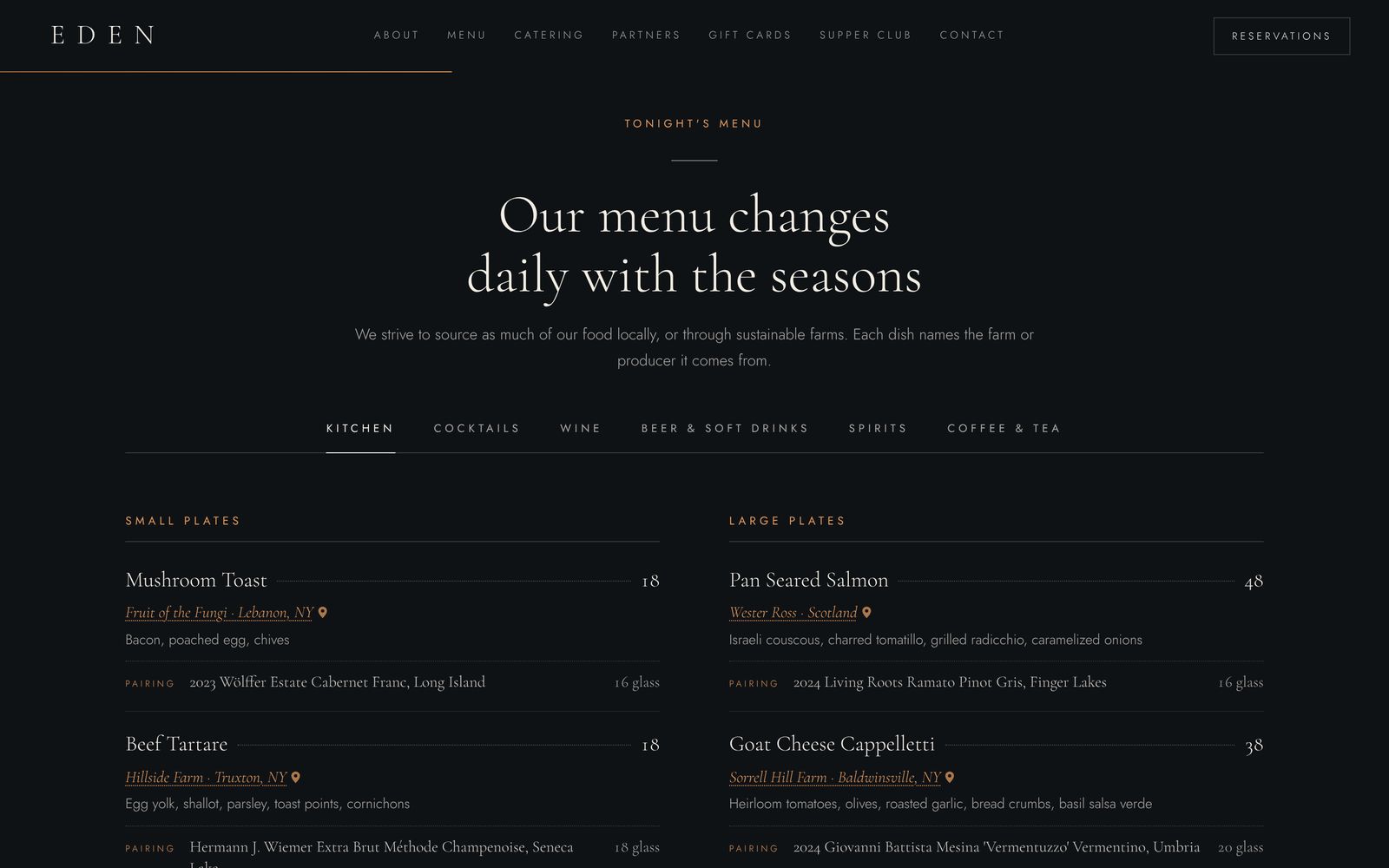
Most restaurant brands are a logo frozen on the day it was approved. A responsive identity is designed as a system instead: a fixed core, and a set of rules for how it answers the world around it. The restaurant changes every night. Its brand can keep up.
Two examples you can see now: Eden's homepage carries a line that reads the restaurant's real fire schedule, and the squares in this site's logo take a different shape for each branch as you read. Try them.
Name, mark, palette and type for a restaurant, bar or farm, built to read at a glance across a dining room.
A brand designed as a system: a core that never moves, and rules for how it answers the season, the hour and the room.
Print and screen menus from one source, so the paper menu, the website and the table tablets never disagree.
Designed for your room, with any of the features from the Technology branch switched on.
Cards, labels, gift cards, wine lists and the signs on the door.
Rich has worked in kitchens since he was fourteen and has run Eden as chef and owner since 2019. The Hospitality branch brings that to your house, by the day or by the project.
A chef's eye on your menu: how it reads, how it flows through the kitchen and how it changes with the seasons. Plus the tools to cost it, set pars and keep it current yourself, quickly.
Strategies for communicating clearly with your team, so everyone knows exactly what they own before, during and after service: defined roles and stations, a pre-shift structure, opening and closing checklists, and the right channel for every message.
Introductions and ordering rhythms with Central New York growers, the way Eden works with about twenty-five of them.
A program from the first inquiry to the BEO: packages, bar pricing, questionnaires and the follow-through.
ROP plans, temperature logs and records ready for the inspector. See Eden's ROP plan.
When the room has to change, the way Eden became a farm-to-door service for local growers in 2020.
Not a template, and not an app you rent and work around. Each system is designed for one restaurant: its stations, its roles, its menu rhythm, its paperwork and its words for things. The site your guests see and the tools your staff use are both built around how you run.
A service worked or walked with you: stations, roles, how orders and paper move, and what keeps you up at night.
The guest site in your brand. The staff side shaped around your roles, your prep, your vendors and your language.
Features are chosen à la carte and switched on one by one. Nothing you'll never use clutters the screen.
The parts no off-the-shelf product has, written for your house: your rules, your forms, your inspector.
New features as the restaurant changes, tested in a working kitchen before they ship.
None of it came from a template. Your system will have its own list.
Change a dish or a price once. The website and table menus on iPad or any tablet update within seconds, and a print-ready menu is ready when you are.
Build the week, publish it, and text each person their shifts. Time-off requests land in one place.
Built from tonight's live menu, with pars, so the kitchen starts every shift on the same page.
Count what's on hand and get the order list by vendor, with value on hand worked out for you.
Wireless sensors in every cooler and freezer. Live readings, alerts when one runs warm, and a log ready for the inspector.
Inquiry, questionnaire, BEO, done. Bar packages and tax-exempt forms included, and every email with the guest saved on the event.
Drop in the week's sales and timecards. Revenue, payroll cost and labor percentage, week by week.
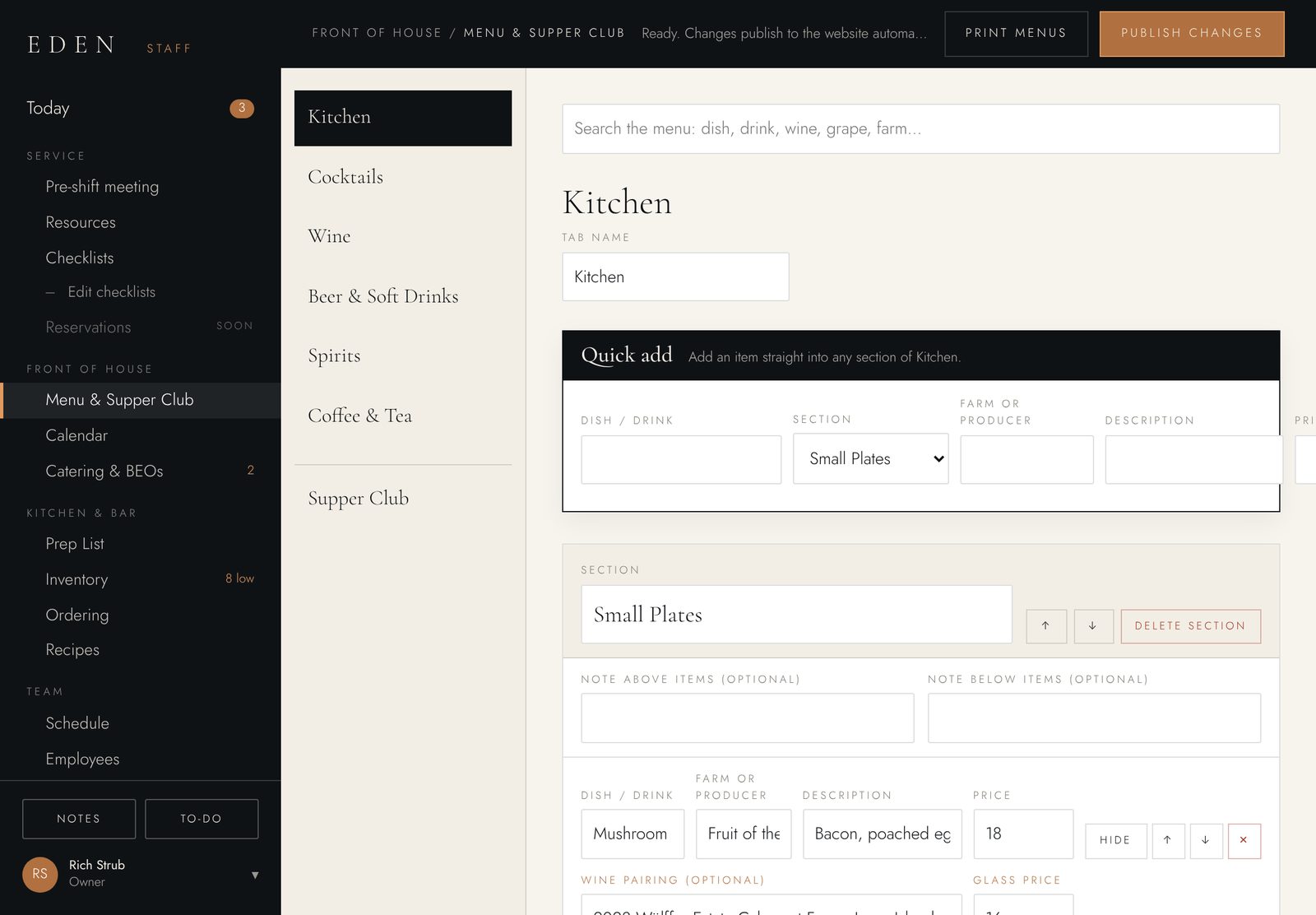
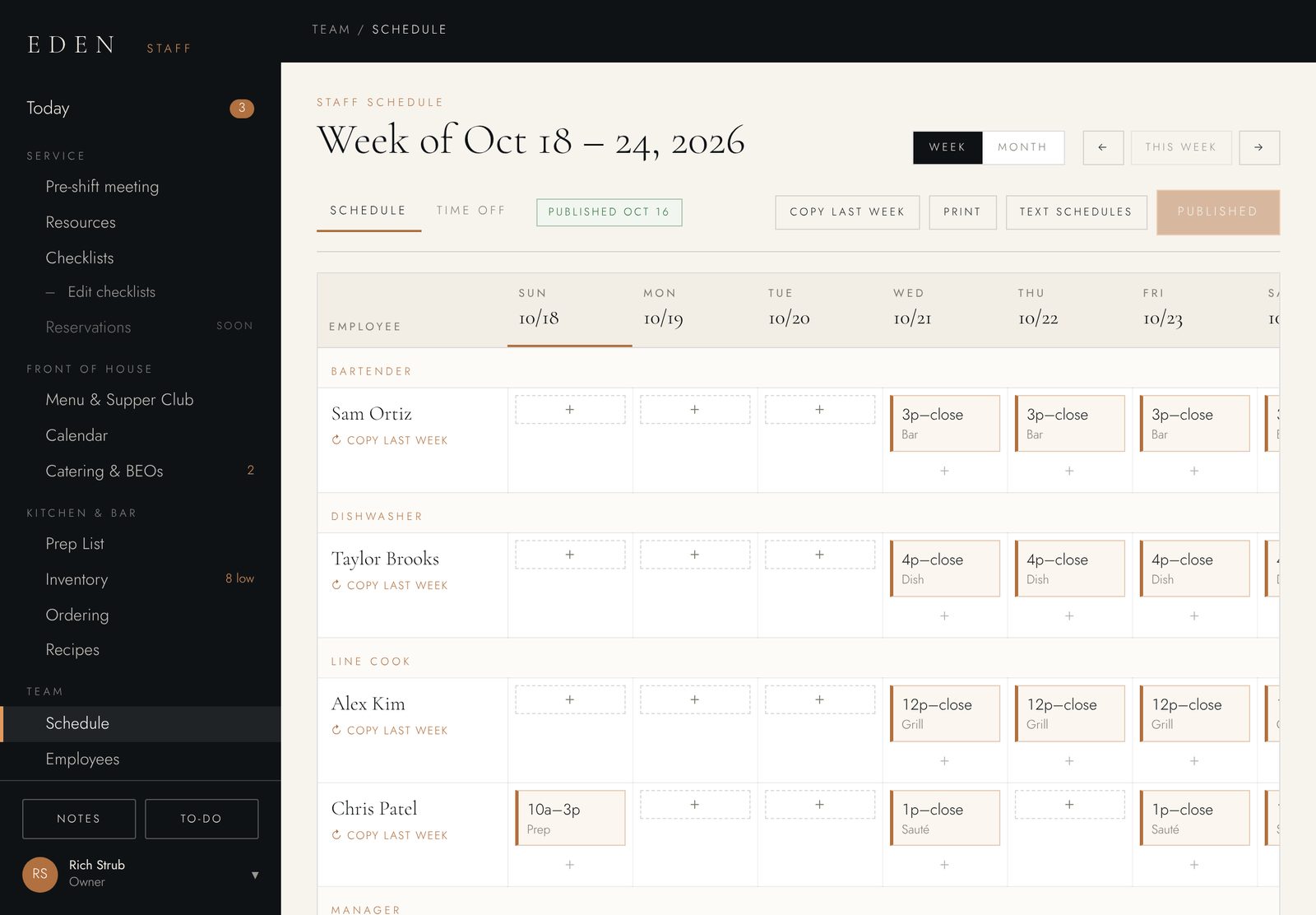
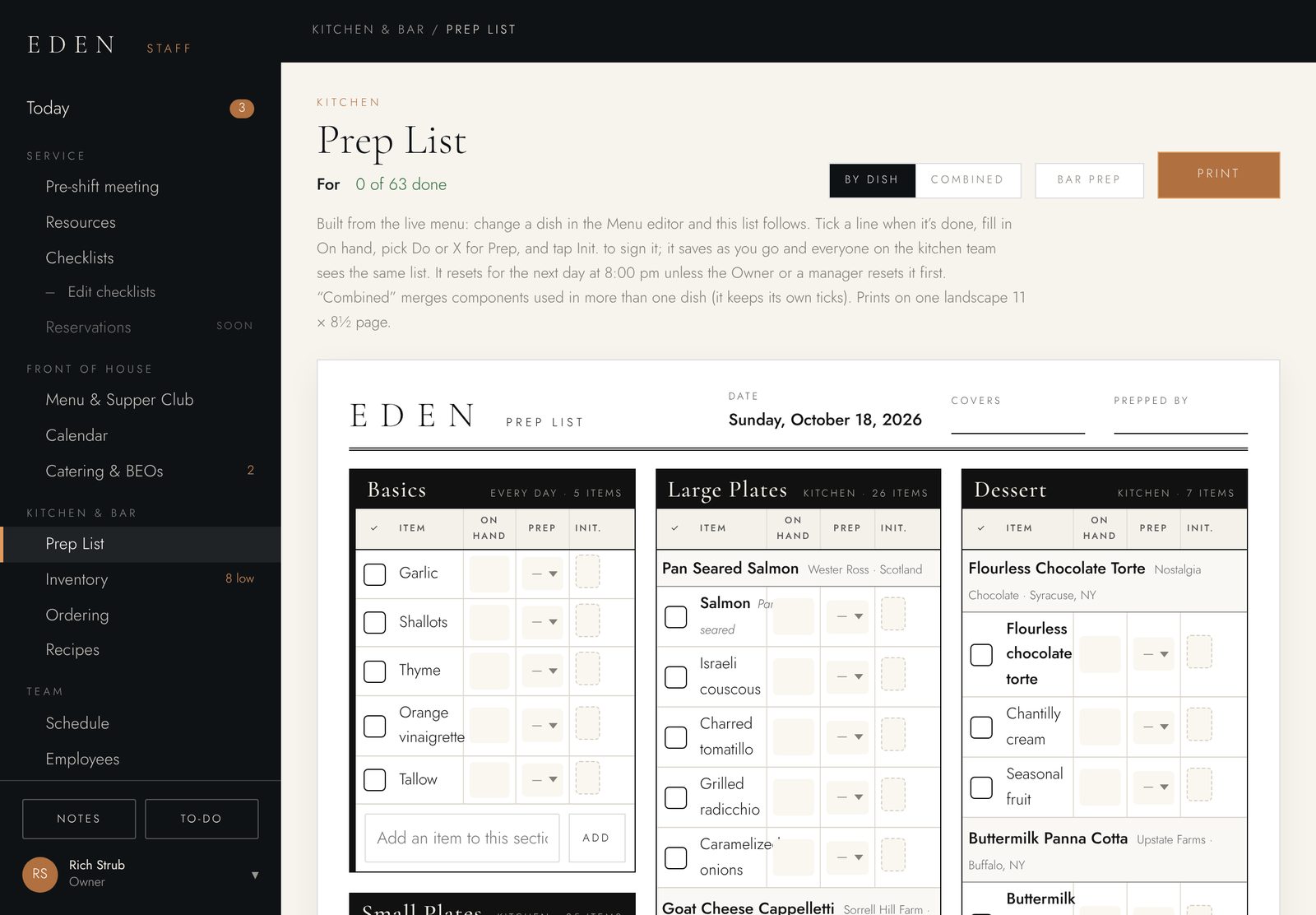
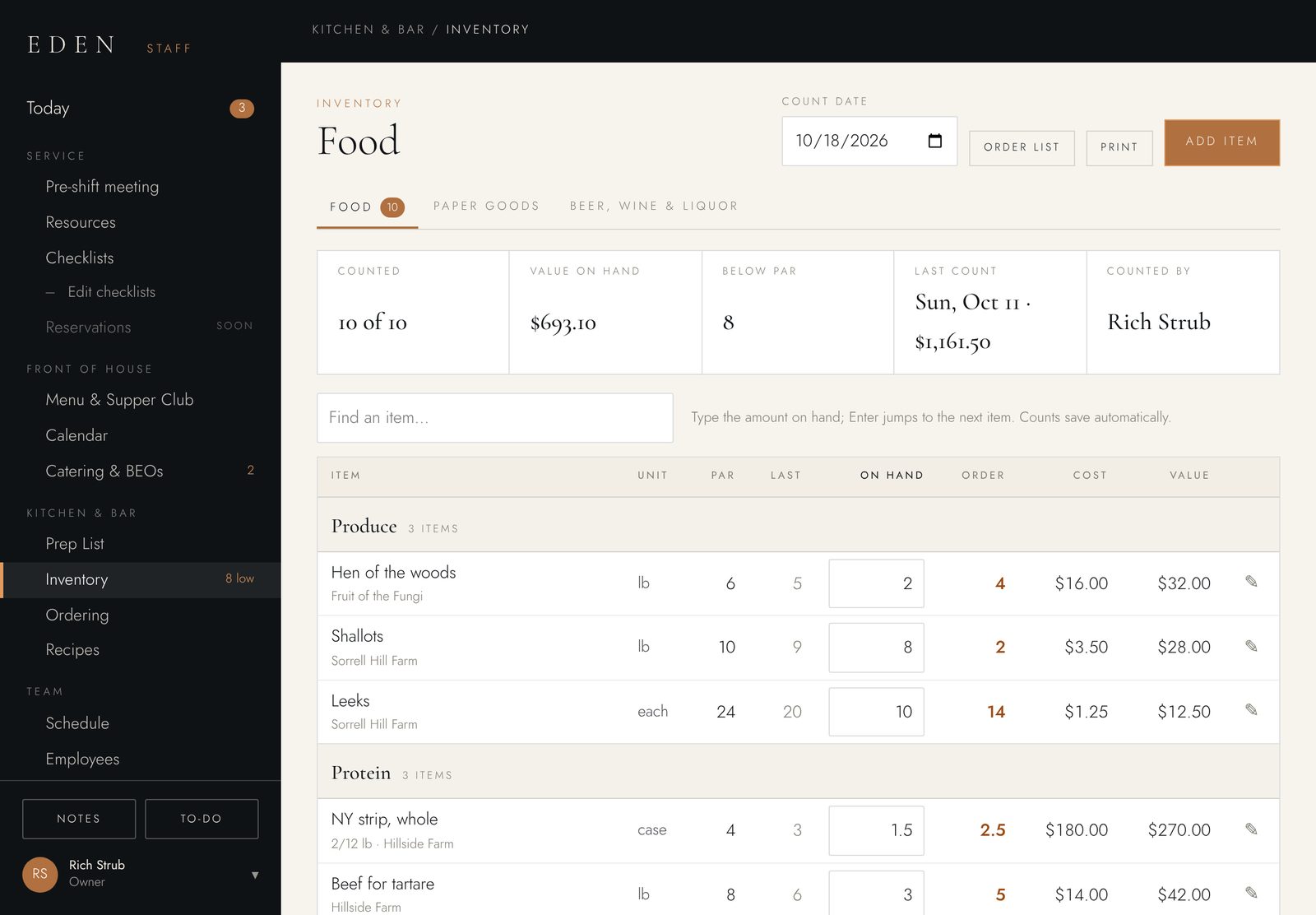
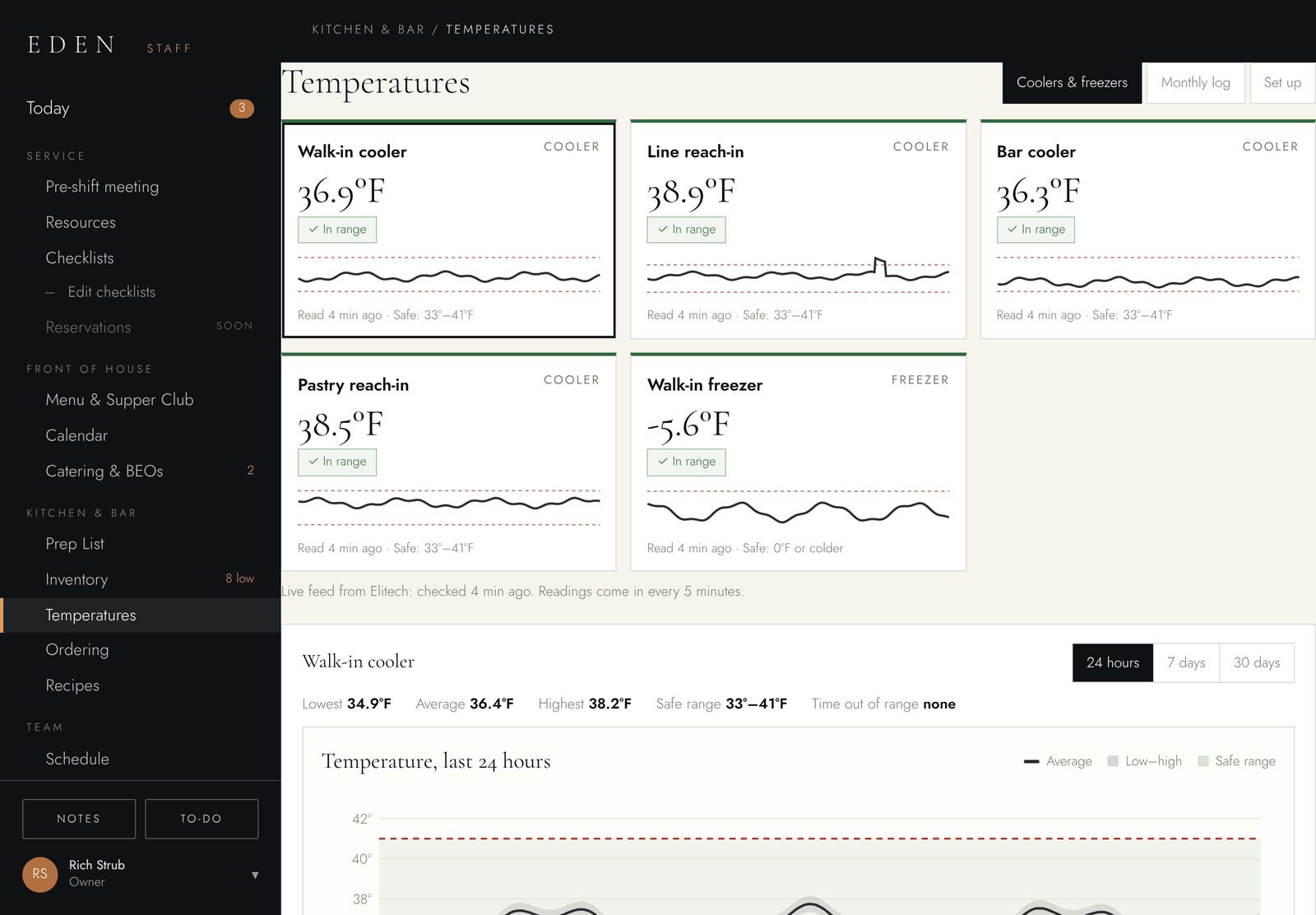
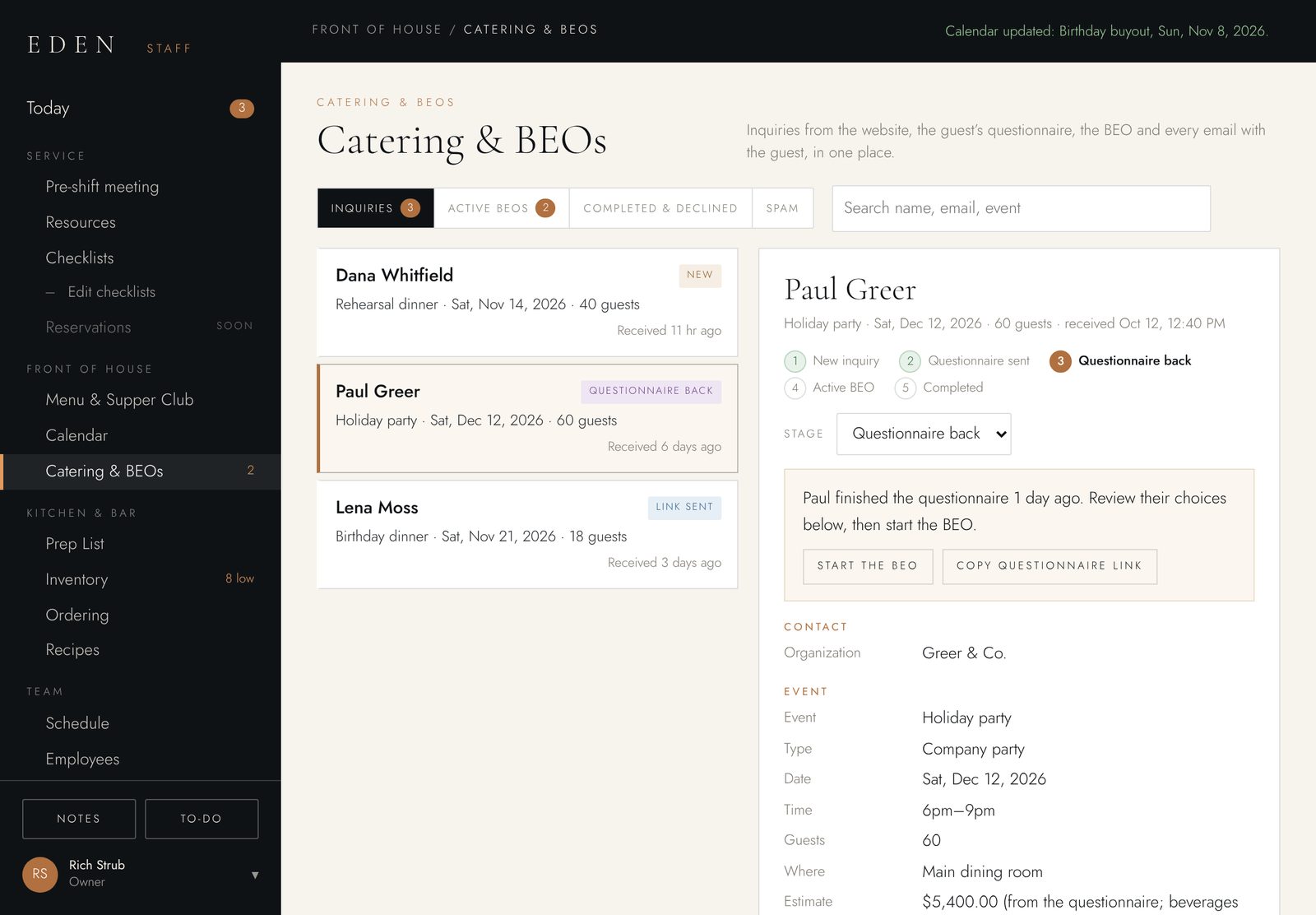
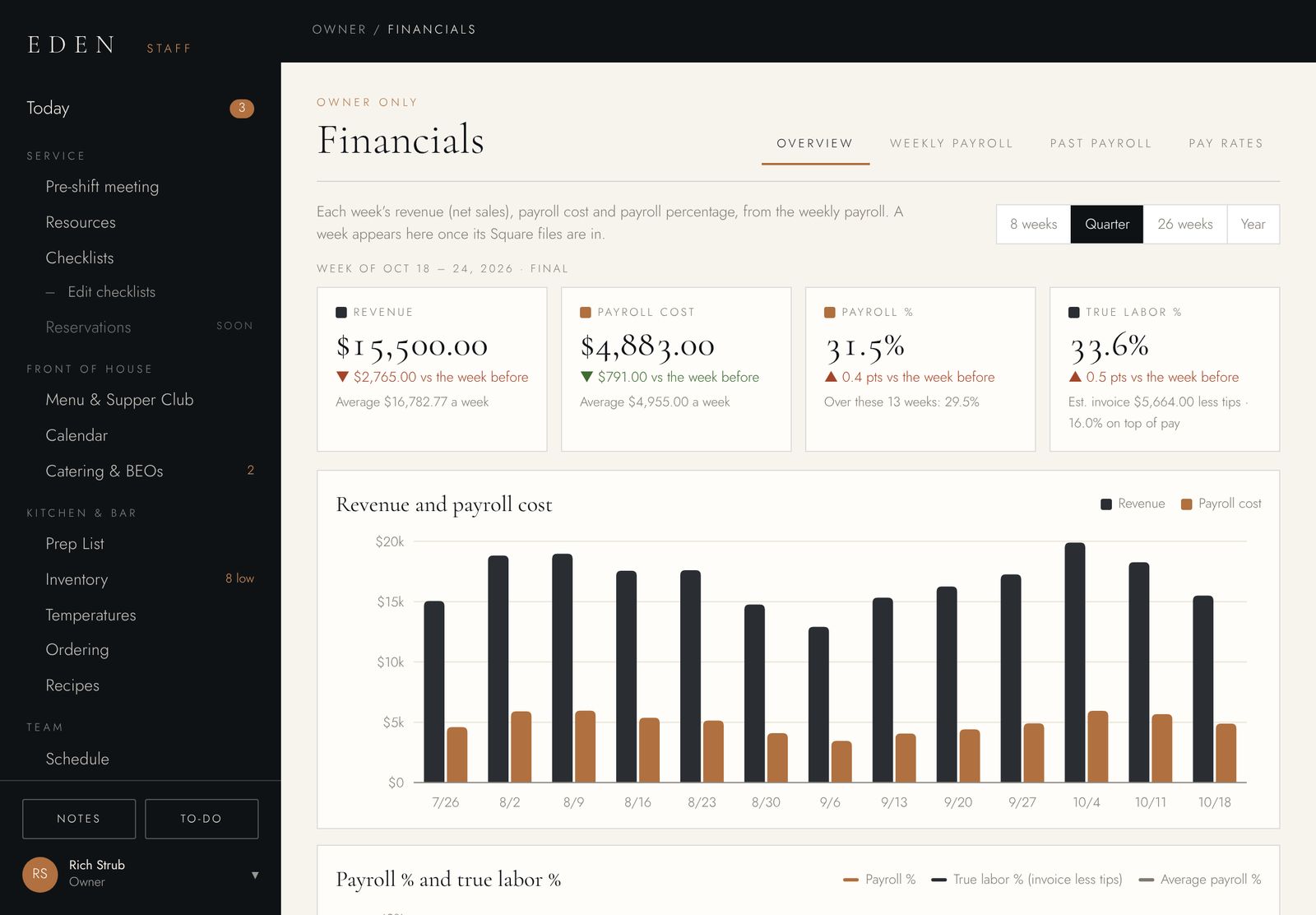
Real screens from Eden's staff site, shown with sample data.
An entirely wood-fired, farm-to-table restaurant in Hanover Square, and the first kitchen to run on the Strüb system.
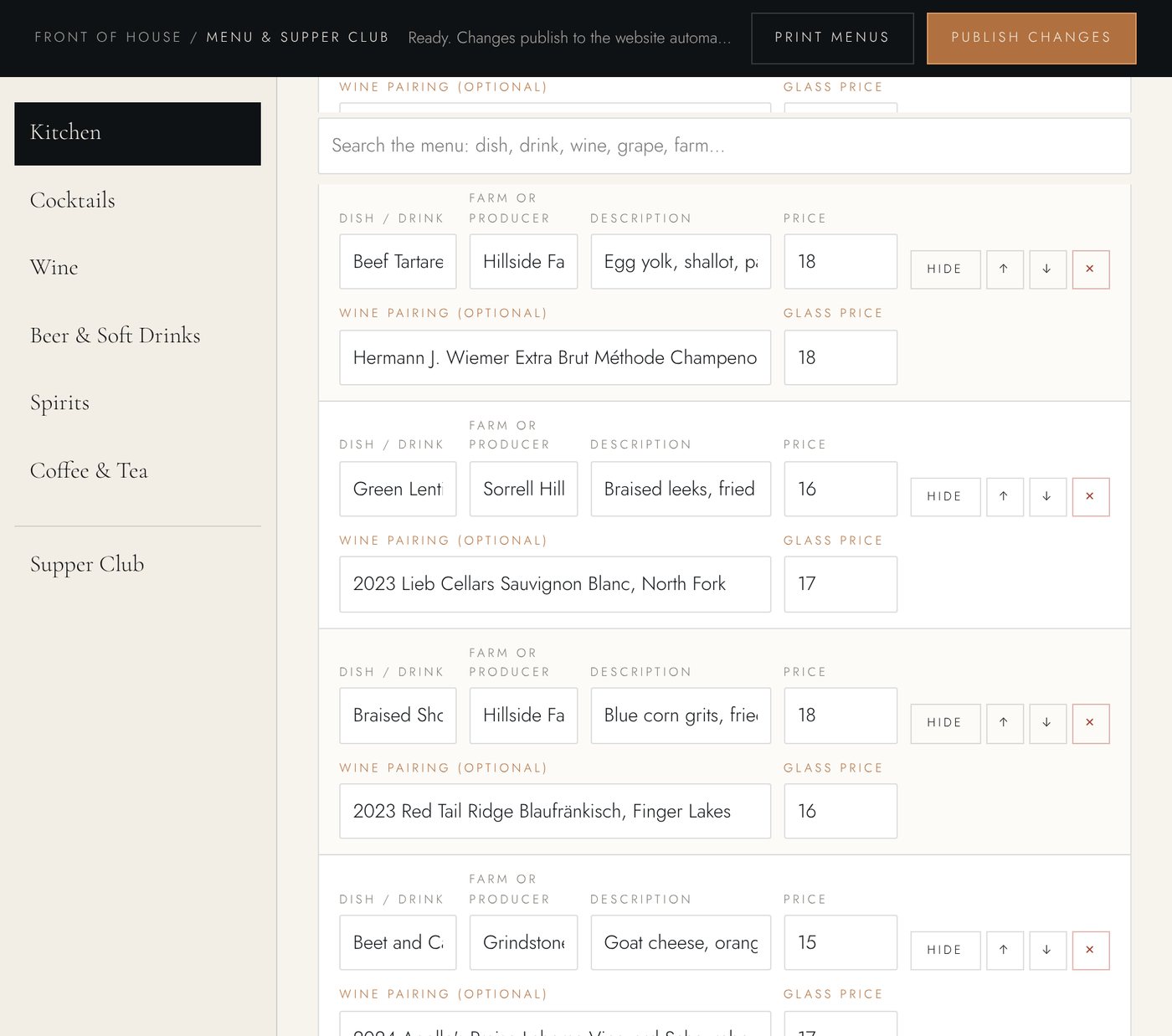
Eden's menu editor, with the real menu. Edits publish to the website and table iPads within seconds.
The system is never finished. These shipped at Eden in the last two weeks, and every one can be switched on for your business.
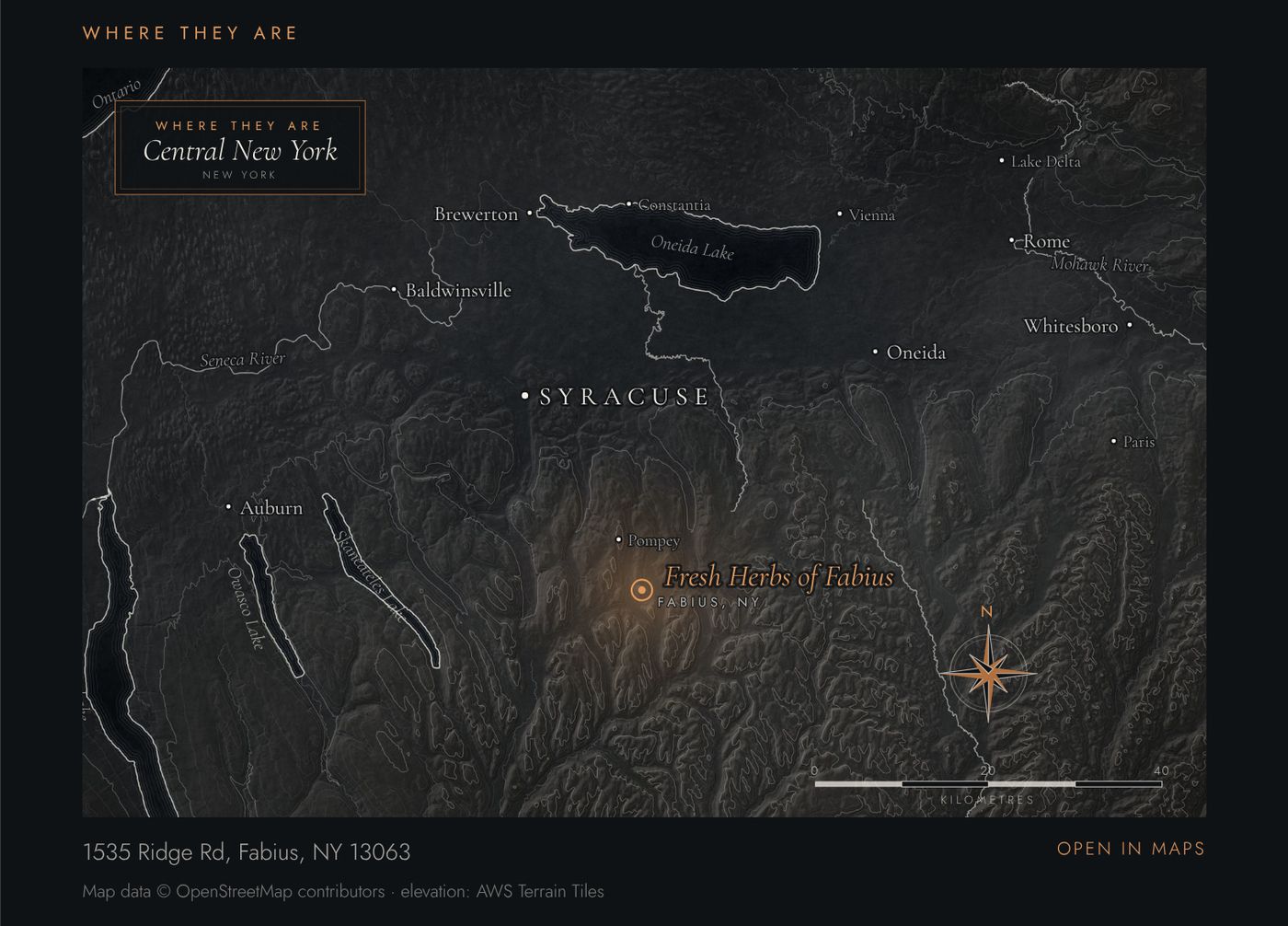
Wireless sensors in the coolers and freezer report every few minutes. A unit is only flagged after 30 minutes out of range, so a delivery doesn't set it off.
Weekly thermometer calibration reminders, the ice-bath check logged, and the ROP log printed for the health inspector. See how it works.
Drop in the week's Square timecards and sales. Out come hours, the payroll company's invoice estimate, and labor percentage over time.
Open bar pricing, signature cocktails, toasts, alcohol-free events and tax-exempt forms, carried from the guest's questionnaire into the BEO and onto the calendar.
Guests search 205 bottles on the website and the table iPads, and every wine and spirit opens a short note.
Every farm and producer gets a story window and an engraved map, edited from the staff site.
Pick many emails at once to move or delete, and sign-offs that follow whoever's mailbox it is.
Vacuum-sealing proteins in house, known as reduced oxygen packaging (ROP), takes a written HACCP plan and records a health inspector can check. Eden's plan, written for the Onondaga County Health Department, covers raw beef, pork, chicken, duck, fish and scallops, held at 41°F or colder for up to 30 days from sealing, or frozen. The staff site keeps those records without a clipboard on the wall.
Wireless sensors in the protein cooler and the freezer report every few minutes. The two ROP units are marked in setup and always sit first, on their own row, for the cooks and the inspector.
A unit is flagged only after 30 minutes out of range, measured reading by reading, so a delivery or a defrost doesn't cry wolf. Then it asks what was done and files the answer against that unit and time.
Seven days after the last good check, a reminder appears on the staff site, a red bar runs across the kitchen Hub and Temps shows a badge until someone logs it. A reading more than 2° off 32°F won't save without what was done about it, and asks for a recheck.
One button prints the month's ROP log: each day's low and high for the ROP units, readings taken by hand, corrective actions, and the Thermometer validation log with every check and who did it.
Duplicate readings are never saved. If the live feed drops, the logger's own export fills the gap, converted to °F. Every entry carries the name of the person who made it.
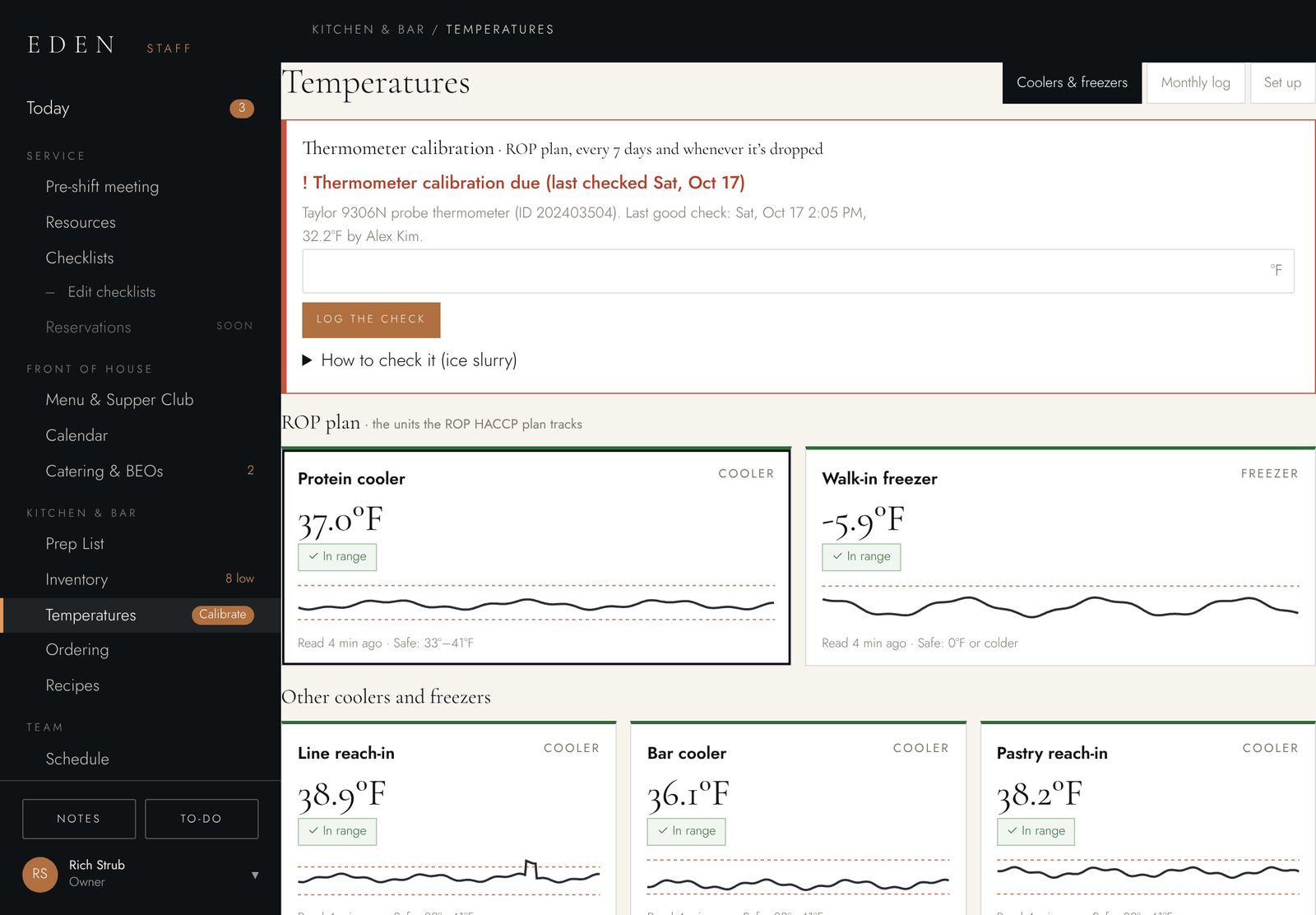

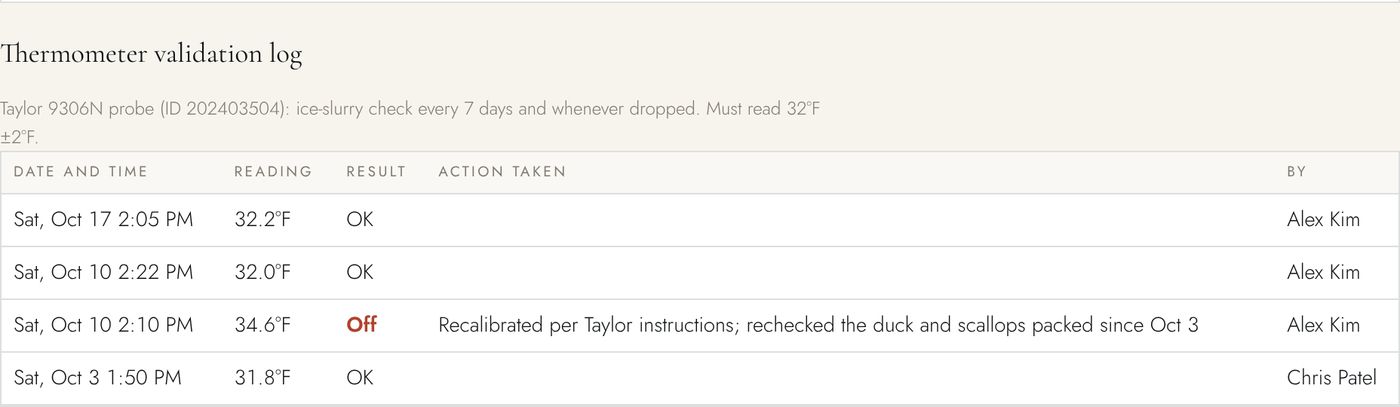
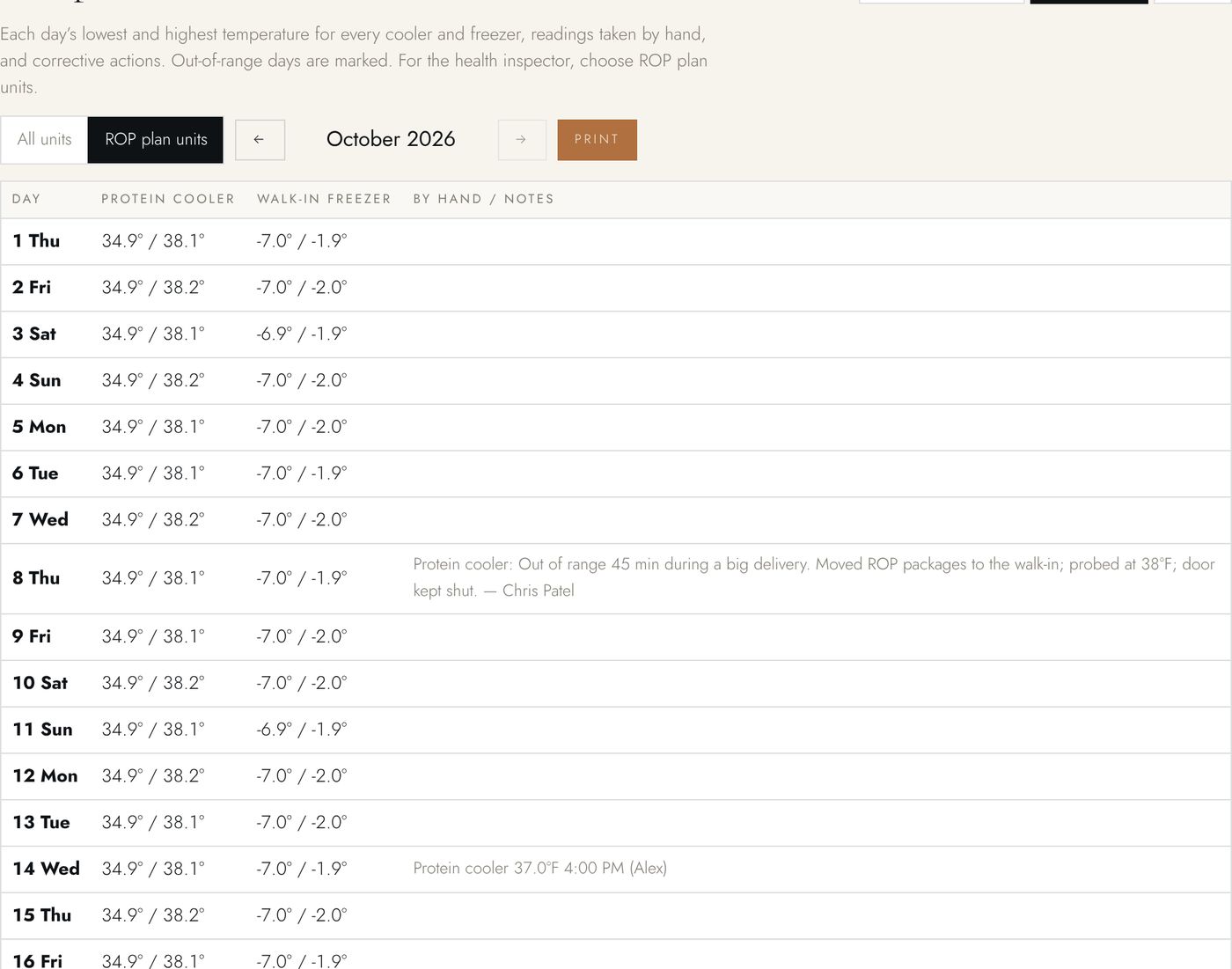
Real screens from Eden's staff site and kitchen Hub, shown with sample readings.
Choose the features you want switched on; everything else stays off until you need it. Each one is shaped for your house rather than copied from Eden, and anything that isn't on this menu can be built. The site your guests see and the software your staff use are both made around your brand, your room, your roles and the way you run service.
Custom design for the front and the back, staff logins by role, a full change history, hosting, security and support.
What your guests see.
What your team uses every shift.
What keeps the business running.
Logo, palette, type and menu design, from someone trained in graphic design who writes menus for a living. The Design branch
Menu consulting, openings, sourcing, events and food safety, by the day. The Hospitality branch
Three Central New York restaurants will launch at founding rates in exchange for a case study. Ask about the remaining spots.
One client at a time, so every launch gets a chef's attention.
A walk-through of your restaurant, your current tools and what slows your team down. Dinner at Eden to see the system in use.
Your brand, your menu and your staff list go in. We set up your domain, email, roles and permissions.
Launch, with simple guides built into the system so managers and staff can pick it up on their own.
Hosting, updates, support and small changes every month. New features reach you as they're built.
Founder · Chef and owner of Eden
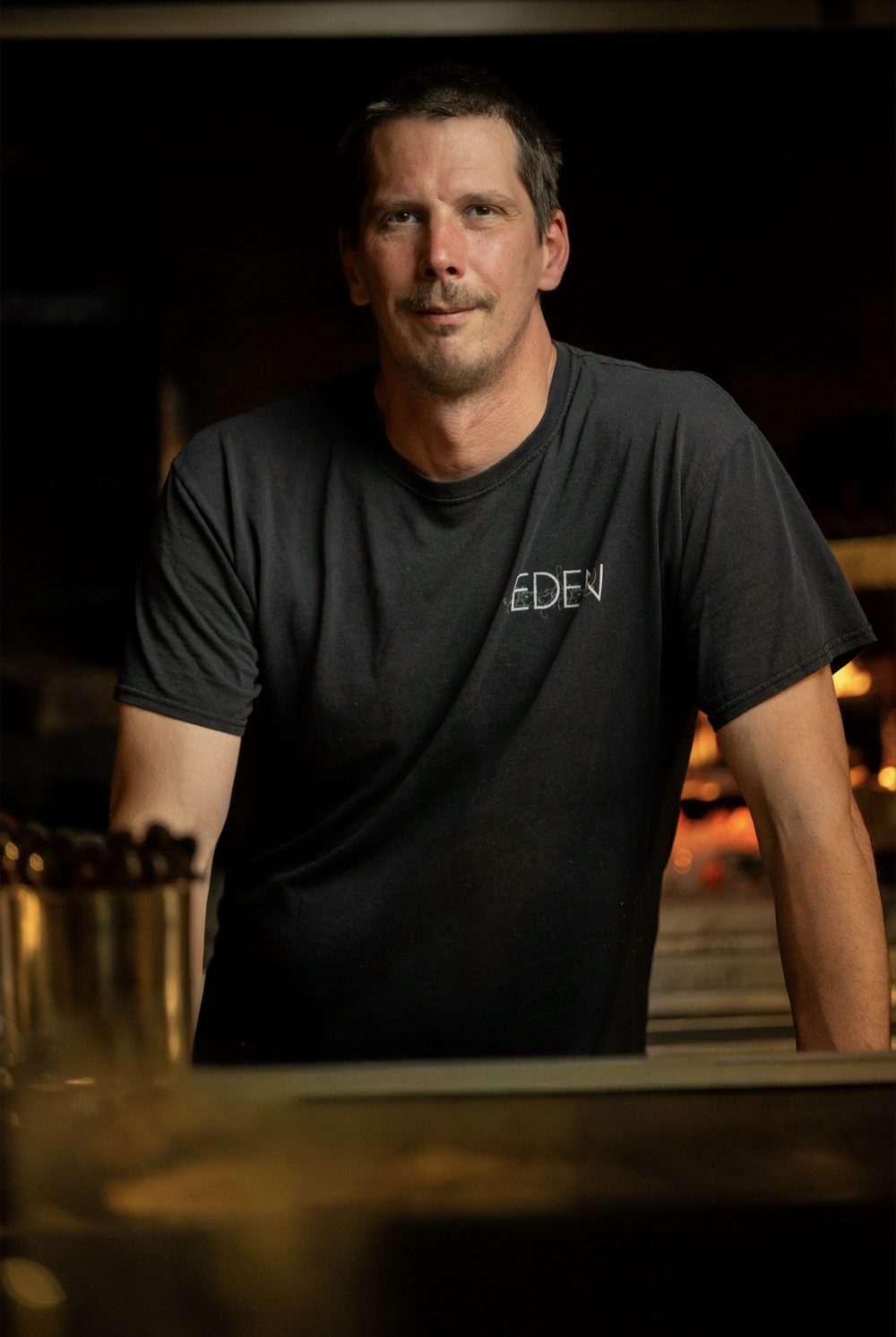
Rich has worked in restaurant kitchens since he was fourteen, most of those years in Vermont, where he cooked at a farm-to-table restaurant and teaching facility. Along the way he earned a degree in graphic design from Champlain College.
In Syracuse he built Eden by hand inside the city's first steel building, from the eight-ton hearth to nearly every piece of furniture. Since opening in 2019 as chef and owner, he has cooked everything over live fire, written menus that change with what the farms bring in, kept in touch with about twenty-five Central New York growers, and built a wine list that pours international bottles alongside a large selection of New York State wines, with New York highlighted by the glass.
When dining rooms closed in 2020, Eden didn't wait. Rich turned the restaurant into a farm-to-door service, building New York State farm boxes of vegetables and protein. Each week Eden picked up from farms across Central New York and its own team made contactless deliveries, so growers who had lost their restaurant sales still had buyers.
Strüb Creative brings design, hospitality and technology into one house: the eye of a designer, the habits of a chef who kept a restaurant running through a shutdown, and the tools he built to run it every night.
Chef-driven dining rooms of 30 to 150 seats across Central New York and the Finger Lakes.
Tasting rooms, cideries, breweries and distilleries with events and a list to show off.
Businesses that live on inquiries, questionnaires and BEOs.
Two to five locations that need one back office.
Growers and producers who want a site as good as what they make.
Tell us about your place. We'll reply within one business day and set up a time to talk, or a dinner at Eden.